VideoBro / How it works
Start a tape. Pass it around. Hit Develop.
Here's the whole loop, from the first clip to the finished film in your Cabinet, written with the real button names.

Six words you'll see a lot
The app has its own vocabulary, borrowed from the camcorder years. It's all there is to learn.
- Tape
- The shared container. One trip, one season, one party. Everyone you invite films into the same tape.
- Active Tape
- A tape still being filmed and edited. You can have several going at once.
- Develop
- The button that turns an Active Tape into one finished film. Cloud processing; you can close the app.
- Film
- The finished, playable video Develop makes. One film per tape, everyone's clips, in order.
- Tape Cabinet
- Where finished films live, on your phone and on the web. The long-term library.
- Shelf
- A group inside the Cabinet. Make shelves, move films between them, hide one behind Face ID, share one by link.
Start to finish, in ten steps
Written with the real button names, so the app will feel familiar before you've opened it. The app teaches the same thing itself: the first time you open a fresh tape, a short seven-card tour points at each button in turn, and you can press each one to try it.
-
Start a tape
Tap New Tape and give it a name: the weekend, the season, the party. That's the only decision. A tape has no settings to get wrong.
You'll usually want one tape per thing. A trip is a tape. A kid's spring season is a tape. If you're running two things at once, run two tapes; you can keep several Active Tapes going.
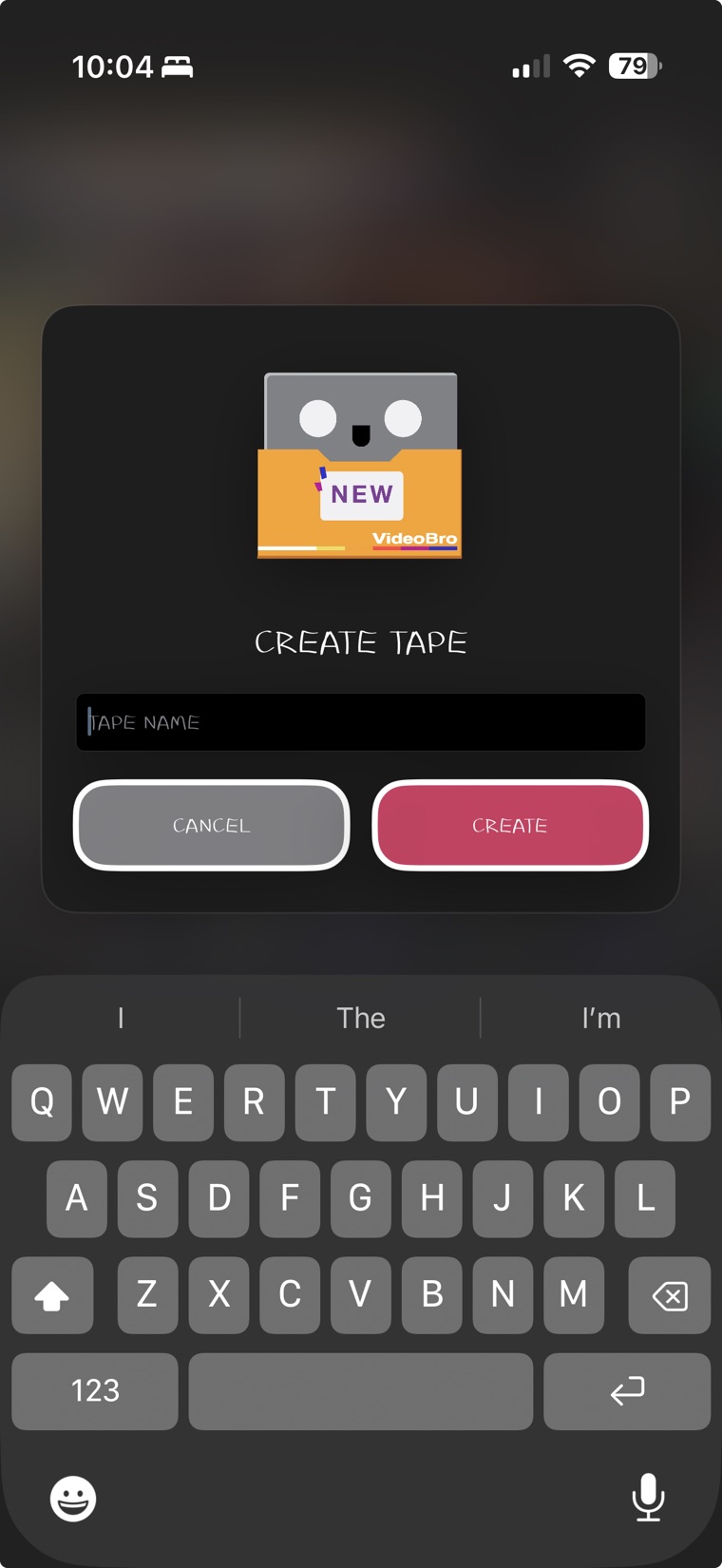
Name it like a label. That's the only decision. -
Turn it sideways, press ARM, then film like you always do
Tap ARM at the top of the screen, between the logo and your profile picture, then go and film with the iPhone Camera app the way you normally would, holding the phone sideways like a camcorder. There is no camera inside VideoBro. A red dot in the ARM pill shows it's on. When you come back to the app, the clips you shot are on the tape.
Or skip ARM and film freely, then tap + later and drop them in yourself. Either way they land in the order they were shot. Only horizontal video goes on a tape: a tape is widescreen, like the films it becomes.
ARM only collects what you film while it's on, and only for the tape you armed it for. Nothing already on your phone gets added unless you choose it.
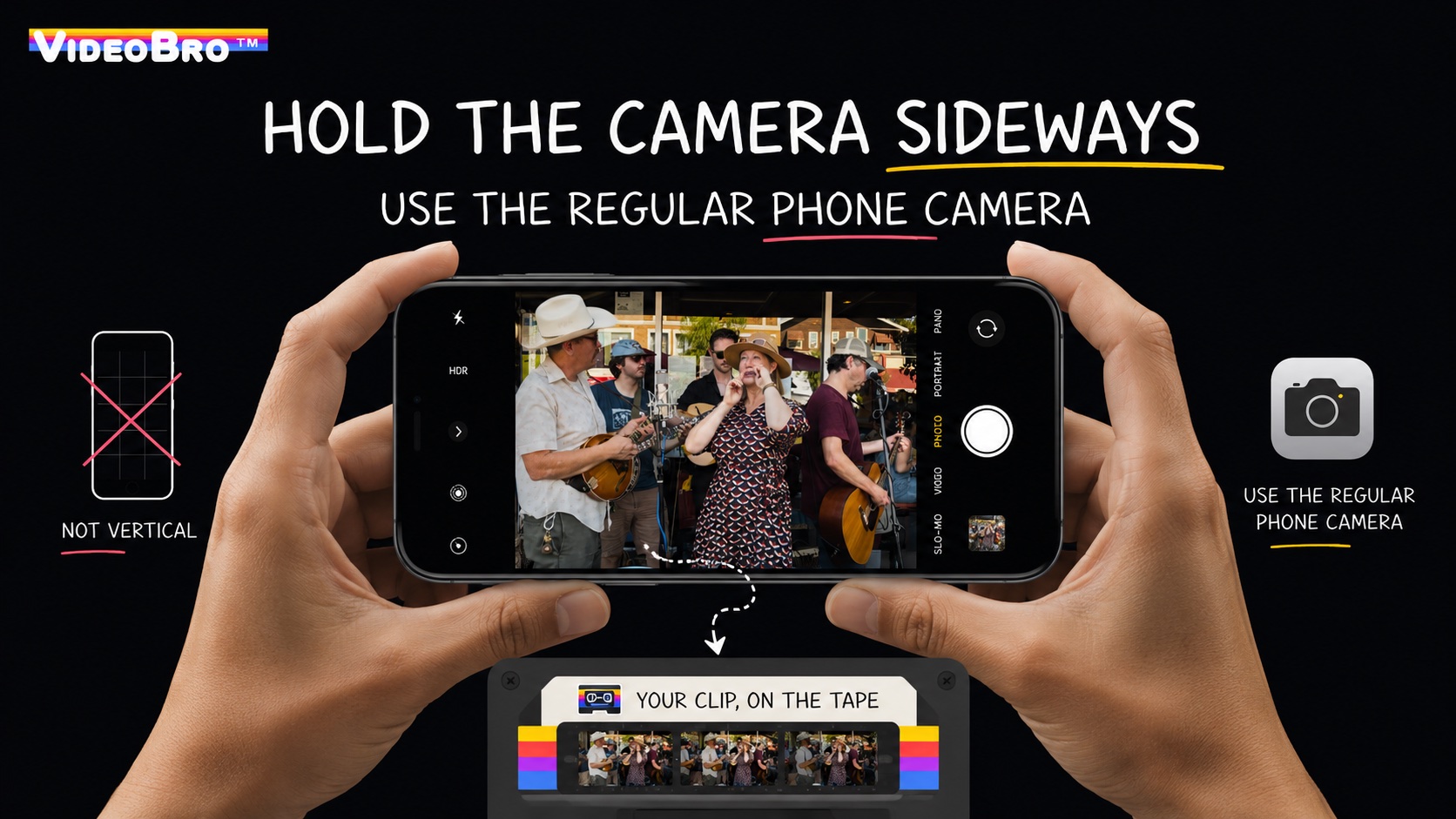
Sideways, in the Camera app you already have. The clip lands on the tape. -
Add the clips you already have
Tap +, the small button in the corner of the clip list. It opens Add Clips, a picker of every horizontal video already on your phone: the thing you shot before you thought of making a tape, the footage from last month, whatever a friend AirDropped you. Pick as many as you like.
They don't get tacked on the end. Each one drops into the tape at the moment it was actually recorded (next step), so old footage and new footage line up as one timeline.
Anything already on your phone can go on the tape. -
Invite your crew
Tap Collab, then Invite. You get a link; send it however you already talk to these people. Whoever opens it films into the same tape from their own phone.
A tape holds up to 8 people, including you, on every plan. Anyone on the tape with an account can invite more people. Friends without an account can still join from your invite, film, and watch the finished film. Invite links work for 7 days.
Everything about shared tapes
Send the link however you like, or let someone scan the code. -
Everything falls into place
This is the part that makes the rest work. Clips are ordered by when they were recorded, not by when they happened to finish uploading. Three phones filming the same evening produce one timeline, in the order it actually happened, without anyone sorting anything.
If a friend's phone was offline until the next morning, their clips still slot into the right moments. There is no drag-to-reorder, on purpose: the tape tells the day the way the day went.
One evening, three phonesrecorded time →7:407:417:427:437:447:45Phone A7:42Phone B7:44Phone C7:43on the tape7:42 A7:43 C7:44 BDashed = uploaded last, from a phone that was offlineIt still lands between 7:42 and 7:44 -
Watch it take shape
An Active Tape already plays like one thing. Tap a clip and it plays straight through into the next, and the next, in order. Turn the phone sideways for full screen. Swipe to jump between clips.
Hold the left side of the picture to rewind, the right side to fast-forward, static and all. It is the fun part, and it's also how you find the clip you want to trim.
Holding one side runs the tape on, static and all. -
Make simple edits
Two tools. Swipe a clip to delete it. Press and hold a clip to trim its start and end. That's the whole editor, and it's enough: a home movie is footage in order, not a production.
Trims never touch the original video; they're applied when the tape is developed, so you can change your mind. Anyone on the tape can trim or remove any clip. It's a shared edit.
Editing and playback, in detail
Pull the handles in. Nothing is cut until the tape is developed. -
Develop it
When the weekend's over, anyone on the tape with an account taps Develop. VideoBro takes everyone's clips, in order, with your trims, and makes one finished widescreen film in the cloud.
Once your clips have finished uploading you can close the app and go do something else. It takes a few minutes, longer for a big tape, and everyone on the tape gets a Tape Developed! notification when it's ready.
What Develop does, exactlyDeveloping, then the finished film in the Cabinet. -
Keep it in the Tape Cabinet
The film lands in your Tape Cabinet, and in the Cabinet of everyone who was on the tape. Sort films onto shelves, hide a shelf behind Face ID, pick a cover frame, save a film to your Camera Roll.
Share a film with one unlisted link. Whoever gets it watches in their browser, no app, no account, on any device. Stop sharing and the link dies. You can also sign in at watchvideobro.com and open your Cabinet from any computer.
The Tape Cabinet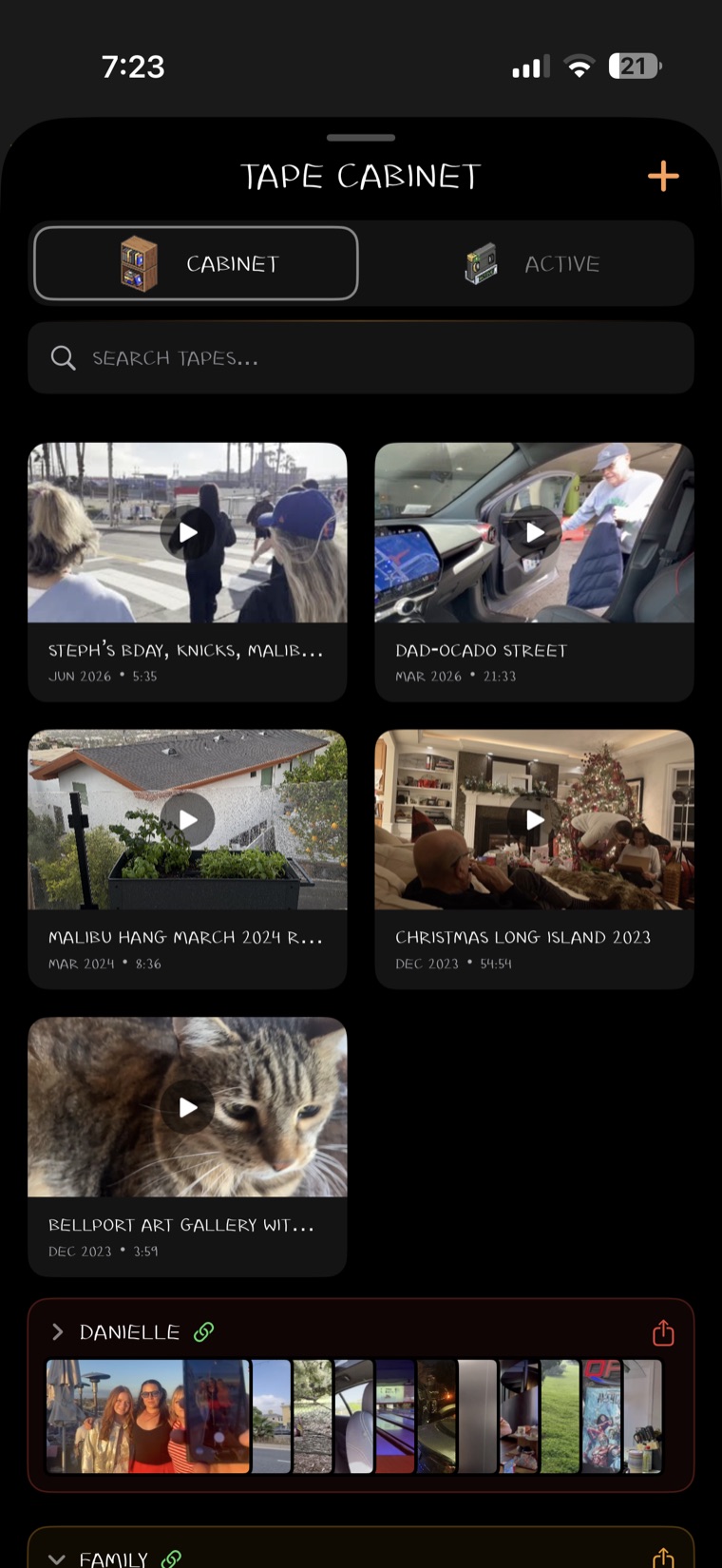
The Tape Cabinet, with shelves. -
Reopen it, if you need to
Forgot a clip? For 30 days after developing, the person who started the tape can tap Continue Editing on the film. The tape goes back to Active with all its clips, you add or trim, and tap Develop Changes.
Be aware of what that does: the old film comes out of the Cabinet for everyone still on the tape, and there is no undo; Develop Changes makes a new one. After a tape sits quiet for 30 days, VideoBro clears the raw clips behind the film to save space. The finished film stays.
What stays, what gets cleaned upActiveActive TapeFilming, adding, trimming.
DevelopCloudDevelopingA few minutes. Close the app.
ReadyCabinetFinished FilmWatch, shelve, share.
Continue Editing (owner, within 30 days) puts the tape back on Active. Develop Changes makes the new film.


What it doesn't do, on purpose.
Most video apps compete on how much they can do to your footage. VideoBro competes on how little you have to do to end up with a finished film. Knowing the edges makes the rest make sense.
Every one of these is the same on the free plan and on any paid plan. None of them is a limit you can pay to lift.
- No reordering. Clips play in the order they were shot. That's the point of the tape.
- No filters, titles or music. Trim and delete are the whole edit. The footage is the film: even VHS mode only changes how it plays, never the file.
- No vertical video. Tapes are widescreen. Hold the phone sideways.
- Two hours per tape, eight people per tape. Longer or larger? Start another tape.
- Filming needs an iPhone. Watching a finished film needs nothing but a browser.
Questions people ask first
Do my friends need the app?
To film into a tape, yes: that takes the iPhone app. They don't need an account for that if you invite them, though they will need a free one to Develop, share, or save a film. To watch a finished film, no: anyone you send a link to can watch it in a browser on any device, with no app and no account.
Do I need an account?
To start your own tape, yes, a free one. Sign in with Apple or an email and password. The exception is joining: if someone invites you to their tape, you can open the invite, film into that tape and watch its finished film without creating an account.
What if I have no signal?
Keep filming. Clips are saved on your phone first and upload on their own when a connection comes back, even if the app isn't open. Nobody stands around waiting for a progress bar.
Do I have to film in a particular order?
No. Clips land in the order they were actually recorded, not the order they finished uploading. Film first, add clips from before you started the tape, join late, it doesn't matter: it all lines up into one timeline on its own.
What if someone films vertically?
It won't be added. ARM only picks up horizontal video, and the Add Clips picker only shows horizontal video too. A tape is widescreen, so turn the phone sideways before you shoot.
Can I keep more than one tape going?
Yes, more than one at a time. An Active Tape has no deadline, so a season can run from the first game to the last without anything happening to it, right alongside a trip or a party on its own tape. Each one keeps its own crew and its own clips until you Develop it.
More on developing: Develop, in full